

Fueling engagement: the power of knowledge in employee retention
Take a look at how you can use knowledge sharing to boost engagement and retention, whether you’re in an in-person, remote, or hybrid setting.
After a spike in distributed work in the last few years, many companies are requiring employees to return to the office. The assumption is that they’ll be more engaged and productive.
If only increasing employee engagement was so simple.
According to Gallup, only 33% of U.S. workers and 23% of workers worldwide are considered engaged. And only 28% of exclusively remote workers feel connected to their organization’s purpose and mission — a key factor in employee engagement.
Mandating RTOs likely won’t do much for long-term employee engagement. But creating high-quality experiences for employees — no matter where they work — will. At Atlassian, we believe creating those high-quality experiences means nailing your knowledge sharing and service management practices, starting from Day 1 of onboarding and continuing throughout the employee lifetime.
Take a look at how you can use knowledge sharing to boost engagement and retention, whether you’re in an in-person, remote, or hybrid setting.

The connection between knowledge sharing and employee engagement
When we think of “employee engagement,” we often think of things like company culture, intentional team gatherings, and career growth ladders. While all of those things are important, HR leaders often miss a fundamental of engaging employees: employees need to know what’s going on.
Nothing is more discouraging for an employee than showing up to work and not understanding simple things, like what project they’re working on, what the company goals are, or why a new policy changed. It’s this silent confusion that tanks engagement and productivity.
Recent Atlassian research shows that 56% of workers say they can only get information by asking someone or scheduling a meeting, which can waste up to 2.4 billion hours a year. This culture of “work around work” quickly makes employees feel they’re swimming upstream with no end in sight.
Conversely, there are many benefits for companies with high employee engagement levels compared to those with low engagement, including:
- 23% increase in profitability
- 18% increase in productivity
- 10% increase in customer loyalty and engagement
- 51% decrease in employee turnover for low-turnover organizations, and 21% decrease in turnover for high-turnover organizations
- 78% decrease in absenteeism (when employees miss work, typically unplanned)
How HR can boost employee engagement and retention at your org
Cultivating employee engagement is fundamental to the work and focus of the HR department. The following steps outline what engagement initiatives could look like at your organization, using a strong foundation of knowledge as your biggest advantage.
Share knowledge by default to ensure alignment and productivity
Having a centralized system in place for documenting and sharing company processes, goals, and other information is essential for improving employee alignment (and, in turn, engagement), especially in a remote or hybrid work environment.
The reality is that open and accessible knowledge sharing can curb miscommunication and wasted work, while giving employees a sense of progress and momentum. Without this knowledge sharing, employees end up spinning their wheels. In fact, recent Atlassian research shows that half of knowledge workers say teams at their company have unknowingly worked on the same thing.
Open and accessible knowledge sharing can happen in a few ways:
- Consistently documenting knowledge: Transparency and accuracy in documentation promotes a culture of trust & accountability.
- Centralizing critical resources: Create a go-to place where employees can find the latest information or announcement about the company.
- Leveraging AI in daily work: Encourage employees to use AI to search for and locate the information they need.
A tool like Confluence provides a comprehensive space for company policies, resources, and more. All of this information is easily discoverable to employees. Confluence is open by default, which means information is automatically indexed and searchable. Plus, Rovo AI uses this information as a knowledge engine to summarize documents, answer employee questions, and suggest relevant content for further reading.

Even Confluence’s home page is designed to make information accessible by showing employees the latest pages that are trending among teammates so they can discover information they didn’t know existed.

Atlassian tip: Encourage onboarding employees to take their first two weeks to explore what information is relevant to their team and goals. Check out how HubSpot creates a culture where all employees feel empowered by knowledge, even if they’re new.
Foster a strong culture of feedback, communication, and purpose
Employees are demotivated when they don’t understand the “why” behind what they’re doing. This can lead to disengagement and lower quality work products. Being transparent about how employee work connects to a larger company strategy gives employees a sense of purpose and ownership, which leads to better results.
Clearly communicating expectations and work impact to employees is key to maximizing engagement and helping them perform at their best. Documenting this knowledge in a shared, centralized resource ensures the process is both successful and sustainable.
Providing regular feedback is also imperative for them to understand the impact of their work and to facilitate individual growth. Specific and actionable feedback that’s respectful and empathetic will empower them with guidance to improve their skills and get better results. One helpful approach that puts feedback into context is the Situation Behavior Impact (SBI) framework.
But open communication isn’t just about correcting mistakes—it’s also an opportunity to recognize achievements and focus on areas of strength, too. It’s also about welcoming and encouraging feedback from employees on what’s working well and what’s not for them, not just the other way around.
When employees know their voices are heard and their contributions are acknowledged, they feel more engaged and connected to their workplace.
Atlassian tip: Create in-person opportunities for open communication with regular 1-on-1 meetings and/or quarterly check-ins. Also make sure you’re creating connections across teams for more learning and development opportunities.
Ensure employees can get the help they need, when they need it
When employees can get the help they need — exactly when they need it — it sends a powerful message: their time and contributions matter. Few things disengage employees faster than feeling stuck or ignored, whether they’re waiting on an IT ticket or trying to find the right form buried in a maze of tools.
For HR teams, ensuring employees get help quickly isn’t just about operational efficiency; it’s about building a culture of responsiveness and respect. When employees know their organization values their time and equips them to succeed, engagement naturally follows.
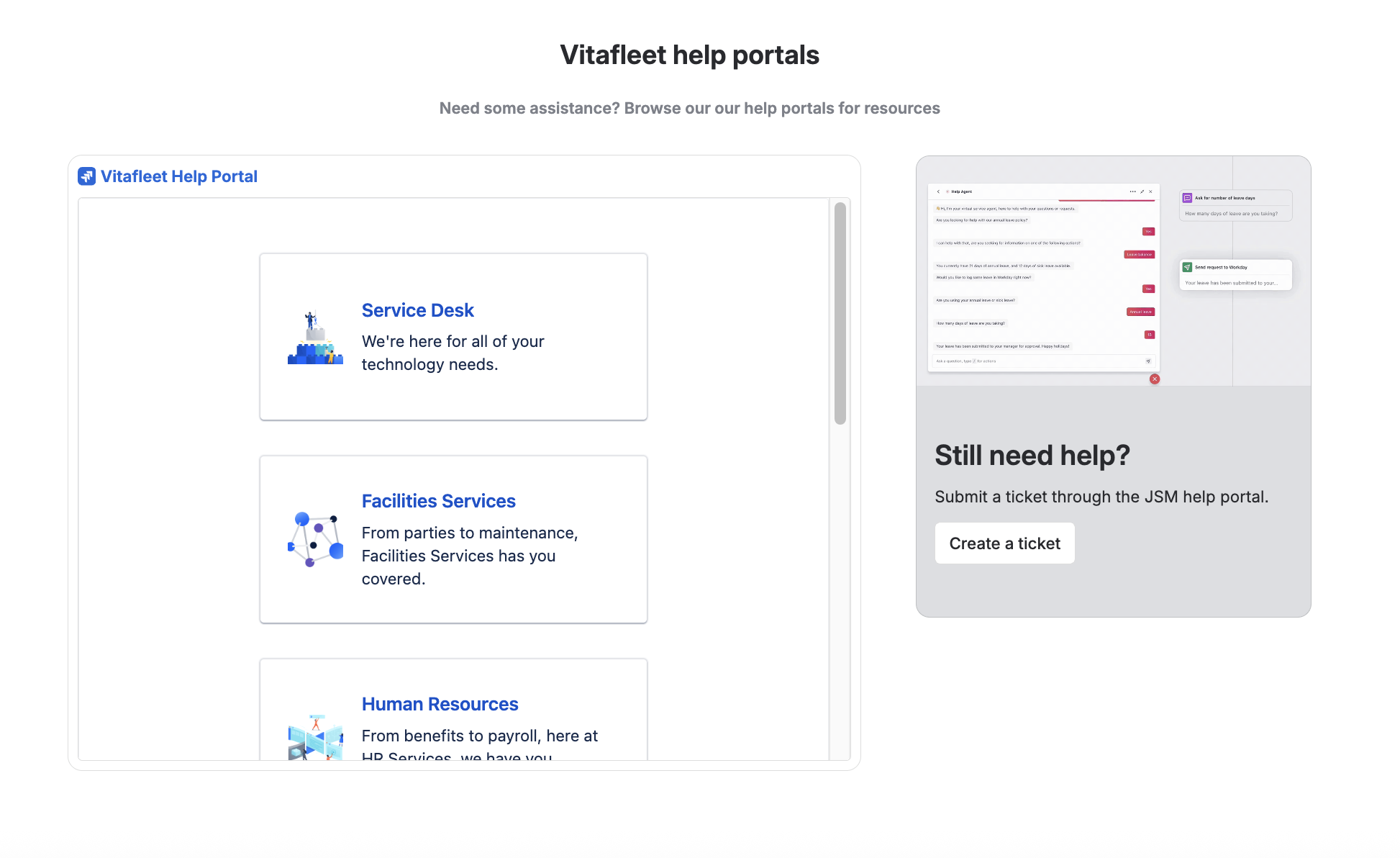
Combining your knowledge base with a tool like Jira Service Management ensures employees can get what they need while your team maintains operational efficiencies. Employees can first search for the information they need on the knowledge base, and if they need extra support, can seamlessly contact HR operational teams.

Remove the friction that certain processes and tools create
A common source of frustration that can lead to lower engagement is having disjointed tools and processes that create work siloes and time-consuming operational tasks.
When different teams and departments use different tools and platforms to do work, it can be hard for employees to find the data and resources they need.
Confluence is a solution that enables more seamless, connected work and breaks down data silos by centralizing information and making it accessible to everyone. For example, Confluence offers a company hub where HR teams can direct employees to self-serve the latest company news and policies. This level of transparency ensures that all team members are aligned, reduces duplication of work, and allows for real-time collaboration.
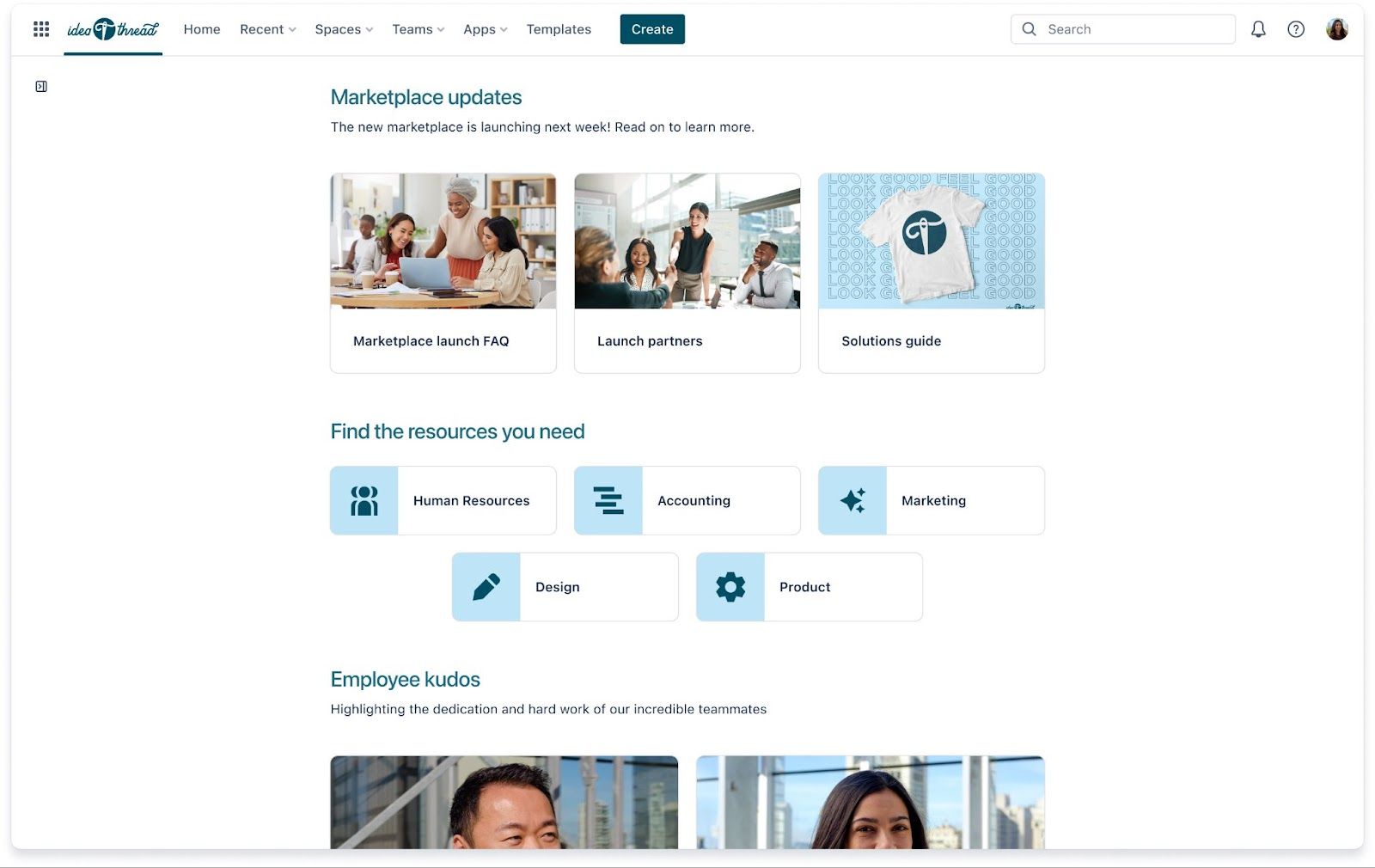
This company hub can also link out to service portals for different teams, like IT Operations, Legal, Finance, and — of course — HR, so employees have a seamless experience navigating from knowledge discovery to personal inquiry.
Improve employee engagement and retention with Atlassian
Atlassian’s work management tools, like Confluence and Loom, provide a shared space to collaborate, communicate, exchange feedback, and share knowledge. A recent survey of Atlassian users found that these products led to improved employee satisfaction. Organizations surveyed claim their employees are “happier, more engaged, and more productive since deploying Atlassian Work management products.”
Discover how your HR team can take your team’s employee engagement to the next level.